Every working dairy produces two things in volume: milk and manure. The milk truck handles the first. The second usually ends up in an open lagoon, where it breaks down on its own and releases methane into the air. A dairy digester takes that same manure and puts it to work. Here is what actually happens, step by step.
Step 1: Collecting the Manure
Nothing about the dairy's daily routine has to change. On most Central Valley dairies, water flushes the freestall lanes several times a day and carries manure to a collection point. With a digester on site, that flush water is routed into the digester instead of an open lagoon. Cows are milked, pens are cleaned, and the manure simply has a new destination.
Step 2: Inside the Covered Lagoon
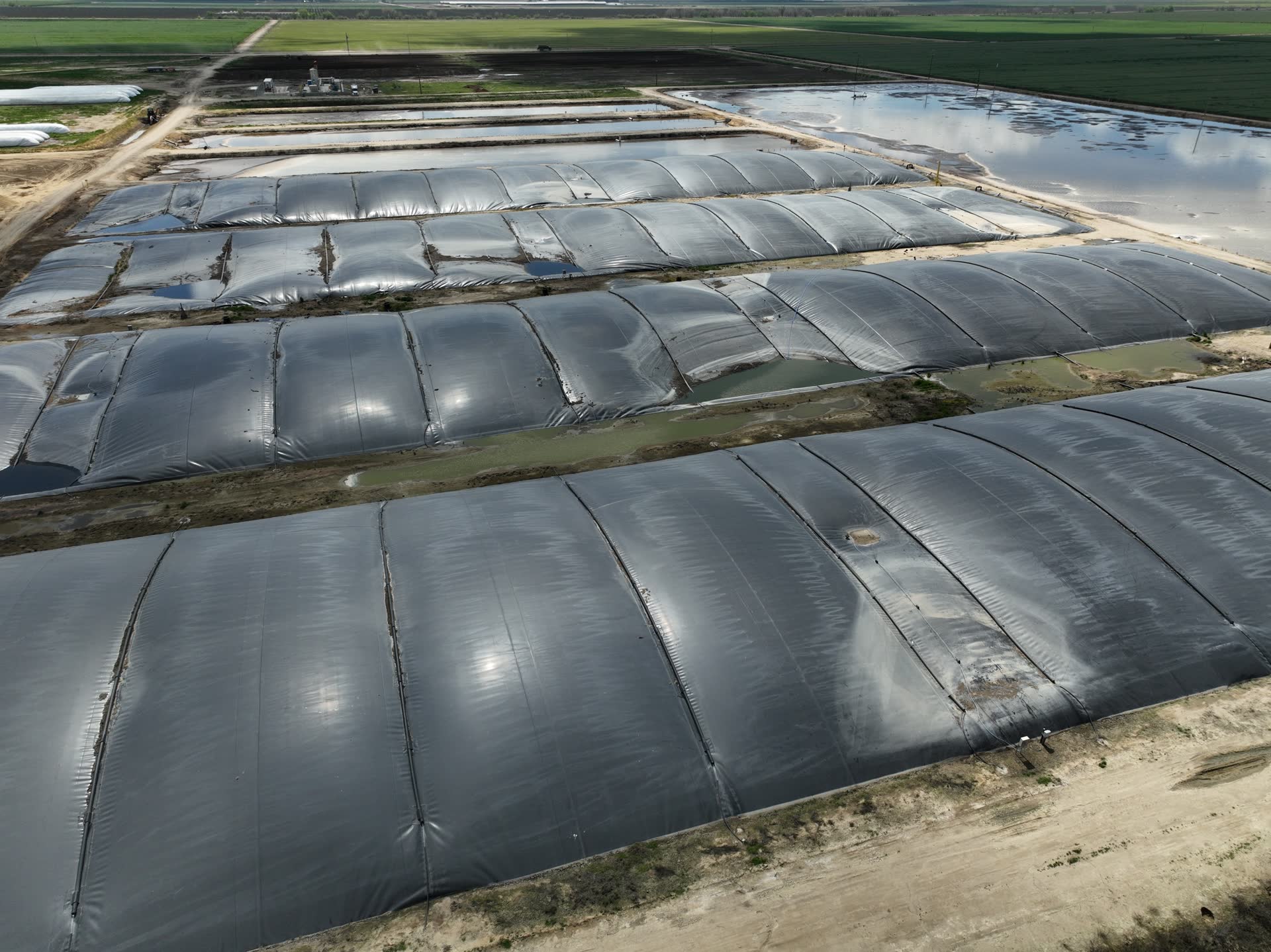
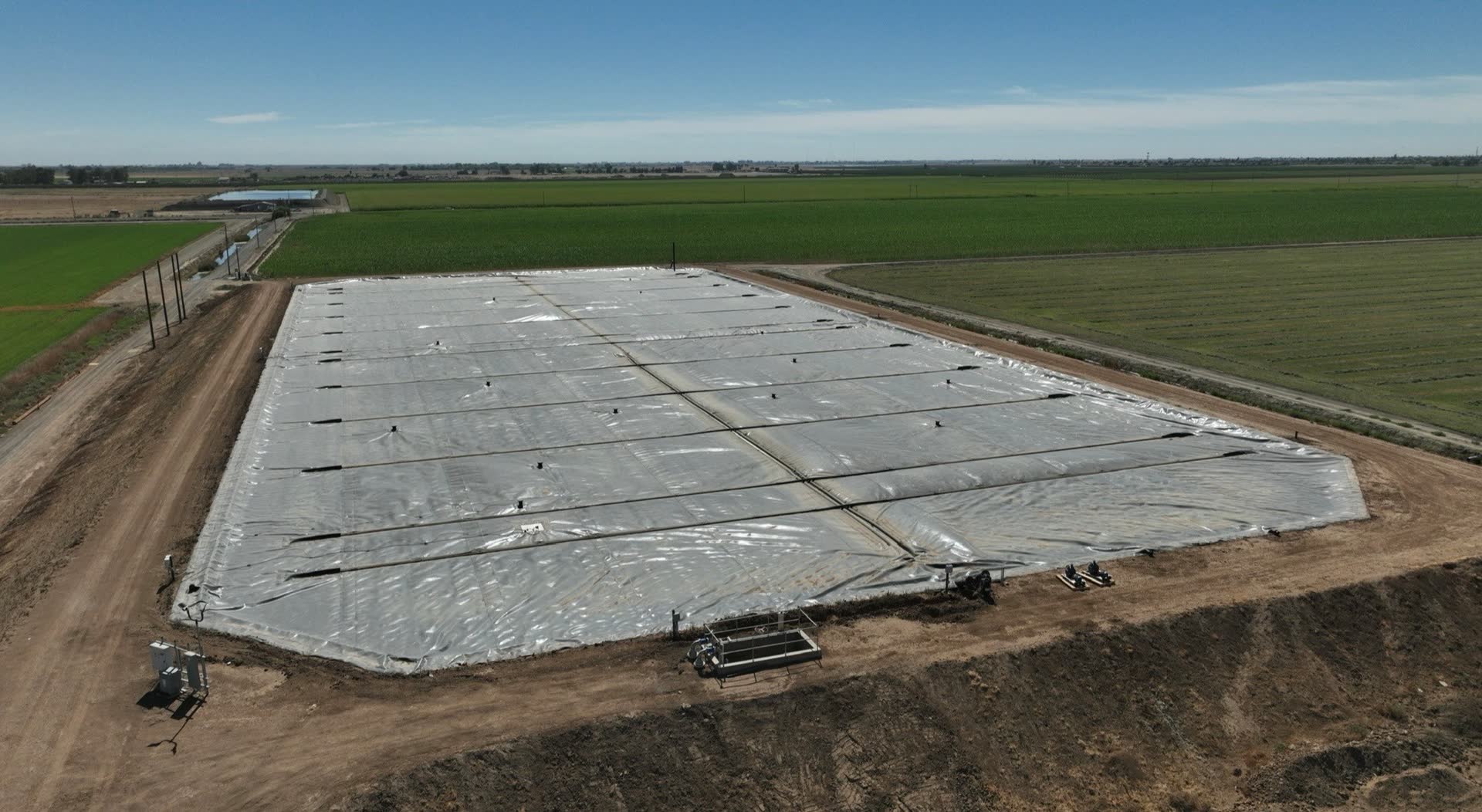
The most common digester design on a dairy is a covered lagoon: a large, lined basin with an airtight cover stretched over the top. To give a sense of scale, one of the lagoons Aligned Digesters built holds 14 million gallons.
Under that cover, bacteria break the manure down in an environment without oxygen — that is what "anaerobic" means. The same decomposition that happens in an open lagoon happens here, with one difference: the gas it produces is trapped instead of escaping into the atmosphere. That gas, called biogas, is roughly half methane, and methane is a far more potent greenhouse gas than carbon dioxide. Capturing it is the whole point.
Step 3: From Biogas to Renewable Natural Gas
Raw biogas is not pipeline-ready. It carries carbon dioxide, water vapor, and trace compounds that have to come out. Upgrading equipment scrubs and conditions the gas until it meets the same specifications as the natural gas already flowing through utility pipelines. The finished product is renewable natural gas, or RNG — chemically the same fuel, made from manure instead of drilled from the ground.
Step 4: Where the Gas Goes
From there, RNG is injected into a pipeline under long-term purchase agreements, or hauled by tanker as vehicle fuel — a "virtual pipeline" that moves gas by road to fleets that run on it. Aligned Digesters' hauling division already moves more than 12,000 tanker loads a year of milk and RNG/CNG, so the logistics are part of the same operation.
What's Left Over Still Works for the Dairy
Digestion removes gas, not nutrients. The liquid that leaves the digester — called digestate — still carries the nitrogen and other nutrients dairymen already put on their fields, and it can be applied to feed crops the way lagoon water is today. Separated solids can serve as bedding. The digester does not take anything away from the farming side of the operation.
What It Costs the Dairy
Under the model Aligned Digesters runs, the answer is nothing out of pocket. Aligned develops the project, builds it as a licensed contractor, and operates the equipment for the long haul — as it has done at digesters we operate since 2022. The dairy shares in the revenue the gas produces, with no capital investment and no added liability. The herd, the milk, and the daily routine stay exactly as they are.
The Bottom Line
Manure is going to break down either way. The only question is whether the methane drifts off into the air or gets captured and sold as fuel. If you want to see how a digester would fit your dairy — on your terms — reach out through our contact page or call (559) 420-7243.