Dairy RNG: the most carbon-negative fuel on the market
Most fuels add greenhouse gas to the atmosphere. Dairy RNG starts by keeping it out.
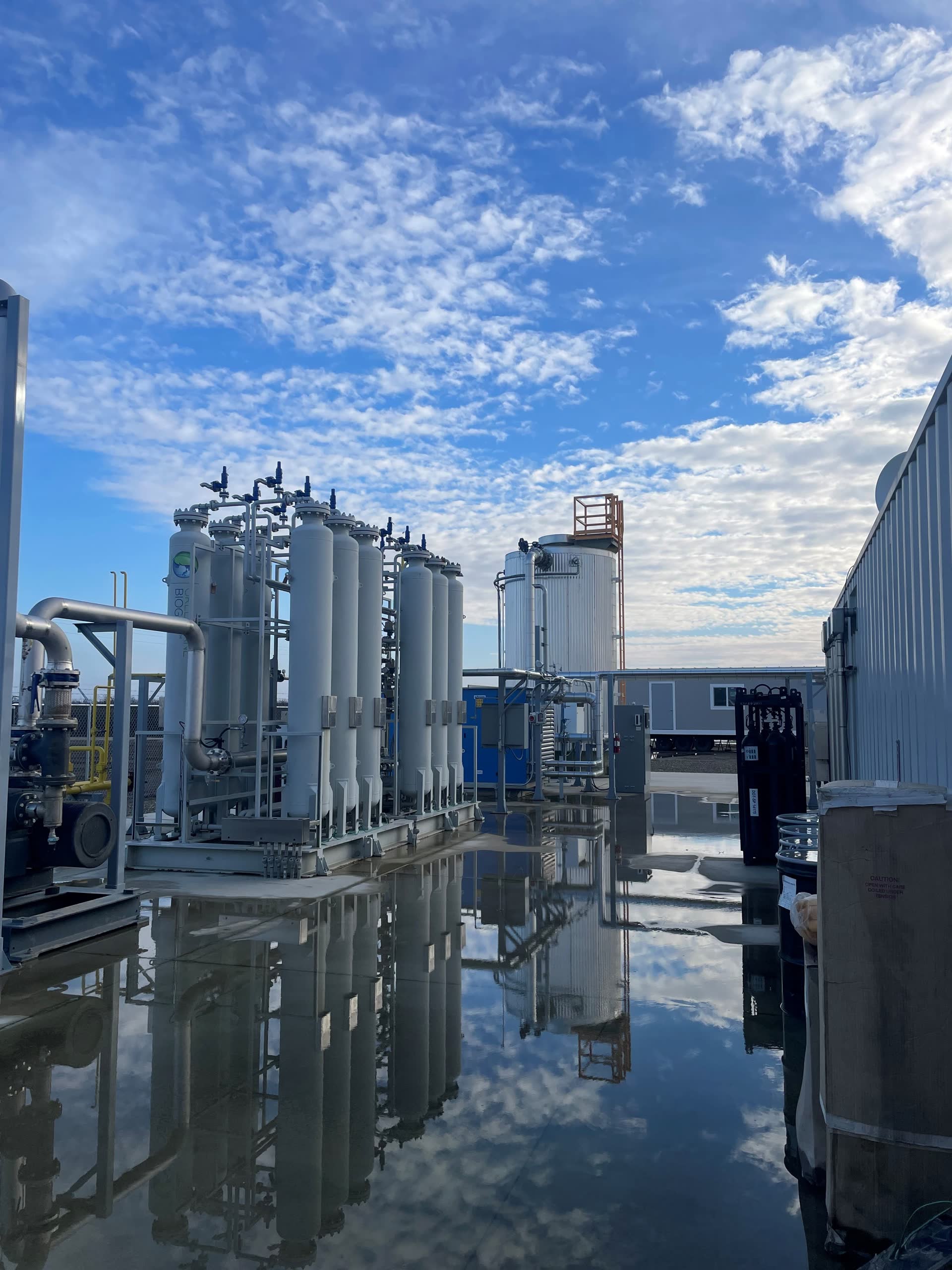
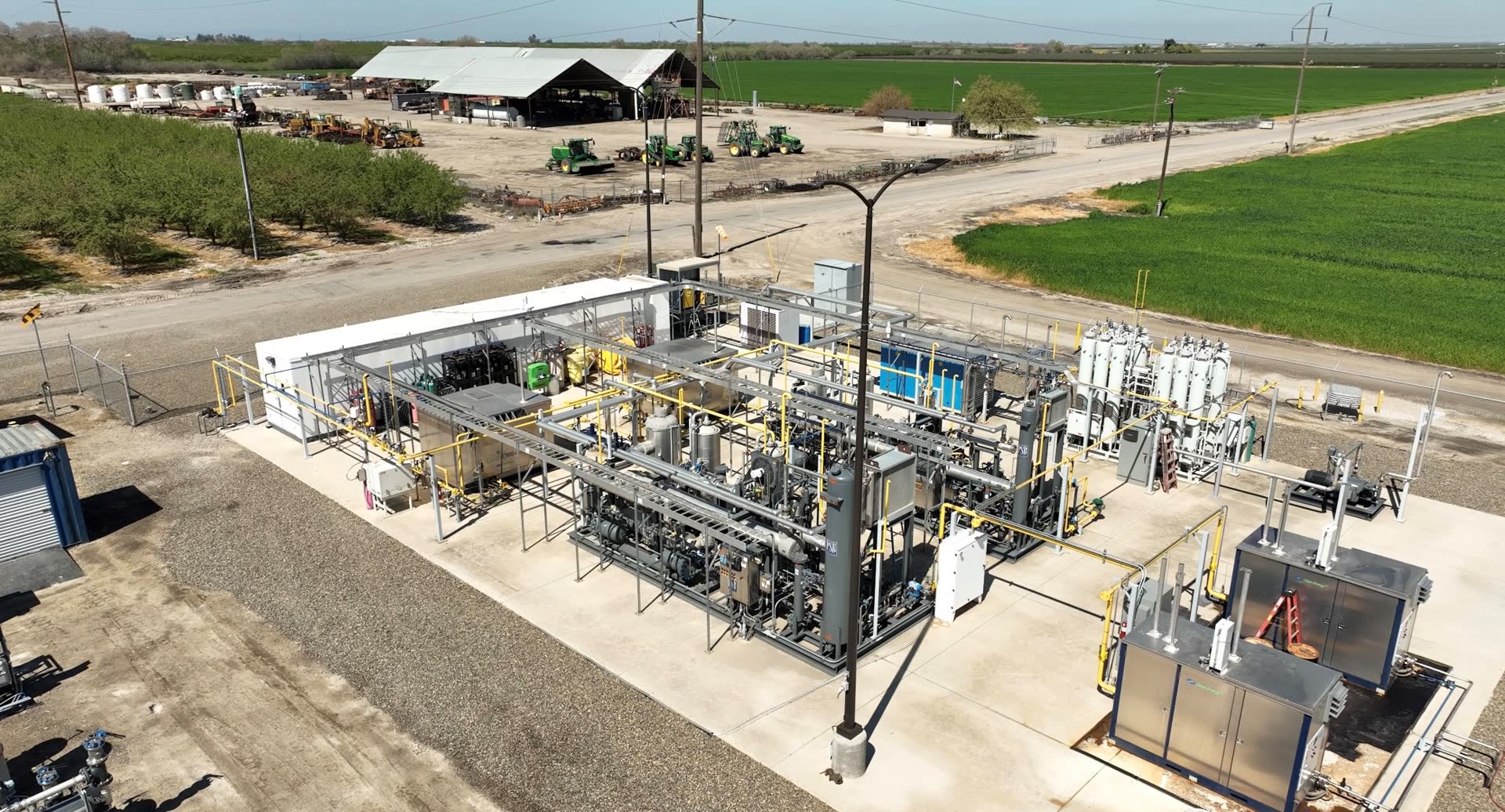
On a dairy without a digester, manure lagoons emit methane. A digester captures that methane before it reaches the atmosphere, cleans it to pipeline quality, and puts it to work as fuel.
California's Low Carbon Fuel Standard (LCFS), administered by the California Air Resources Board (CARB), scores every fuel on its full lifecycle carbon intensity. Because the avoided methane counts against the fuel's footprint, certified dairy RNG pathways score below zero. Not low-carbon. Negative.
When you work with us, the score attached to your gas or your attributes is the score CARB certified for the specific digester that produced it.
Two ways to work with us
Physical RNG supply. Pipeline-quality renewable natural gas, chemically interchangeable with the fossil gas your equipment already burns — no retrofits required. Where pipeline interconnection works, gas is delivered under contract through the grid. Where it doesn't, our hauling division operates a virtual pipeline — RNG and CNG moved by tanker, a capability we already run at scale alongside more than 12,000 tanker loads per year.
Environmental attributes. Sometimes the molecule can't physically reach your facility, but the climate benefit still can. Working with our partners, we structure those attributes so they are retired in your name and count toward your footprint goals.
Why data centers
- Power demand is outrunning clean supply. RNG-fueled generation is dispatchable — it runs when you need it, not when the weather allows.
- Backup generation is a footprint blind spot. Natural-gas generators running on RNG turn the backup fleet from a reporting problem into a much lower-carbon asset.
- Heat and cooling are gas-friendly loads. Gas-driven chillers, absorption cooling, and combined heat and power all run on RNG today, with no technology risk.
- Residual emissions need credible answers. After efficiency and renewable electricity, most footprint targets still leave a gap. Verified attributes from avoided dairy methane are among the most defensible instruments available to close it.
Verified and traceable
Every claim we make rests on measurement, not estimates. We won't claim what we can't measure, and we won't let the same benefit count twice.
Our production base
Our gas comes from real, operating digesters on Central Valley dairies — not a development pipeline on paper. Our crews have run digesters day in and day out since 2017, and we built one of the largest lagoon digesters in the state.
The projects are on the public record: listed in the EPA's national digester database, with fuel pathways whose carbon-intensity scores run around minus 400 gCO2e/MJ — the regulator's math, not ours. Federal records credit our operating projects with keeping more than 125,000 metric tons of CO2e out of the air every year.
We're the licensed contractor on our own projects — the projects behind your gas are ours from the ground up.