"Carbon-negative fuel" sounds like something a marketing department invented. It's actually an accounting result, computed by a state regulator and published on a public registry. This post walks through how dairy renewable natural gas (RNG) ends up with a score below zero, what a data center can do with the fuel and its attributes, and exactly where to check the numbers.
What a negative carbon score means
Every transportation fuel in California gets a lifecycle carbon intensity score under CARB's Low Carbon Fuel Standard: grams of CO2-equivalent per megajoule of energy, counted across the fuel's whole life. Drilling, refining, trucking, burning. Diesel scores well into positive territory. Conventional renewable fuels score lower, but still above zero, because making and moving them takes energy.
A fuel scores negative when producing it destroys more greenhouse gas than the rest of its lifecycle emits. That's rare. Dairy RNG is one of the few fuels that does it. Certified dairy RNG pathways on public record score around -400 gCO2e/MJ, and Aligned-built projects are among them.
The reason is the feedstock.
Why manure methane counts for so much
A dairy stores manure in lagoons, where it breaks down without oxygen and gives off methane. Left alone, that methane goes straight into the air. Methane traps roughly 28 times more heat than CO2 over a 100-year window, and more than that over 20 years, so every ton kept out of the atmosphere is worth a much larger pile of CO2 on the ledger.
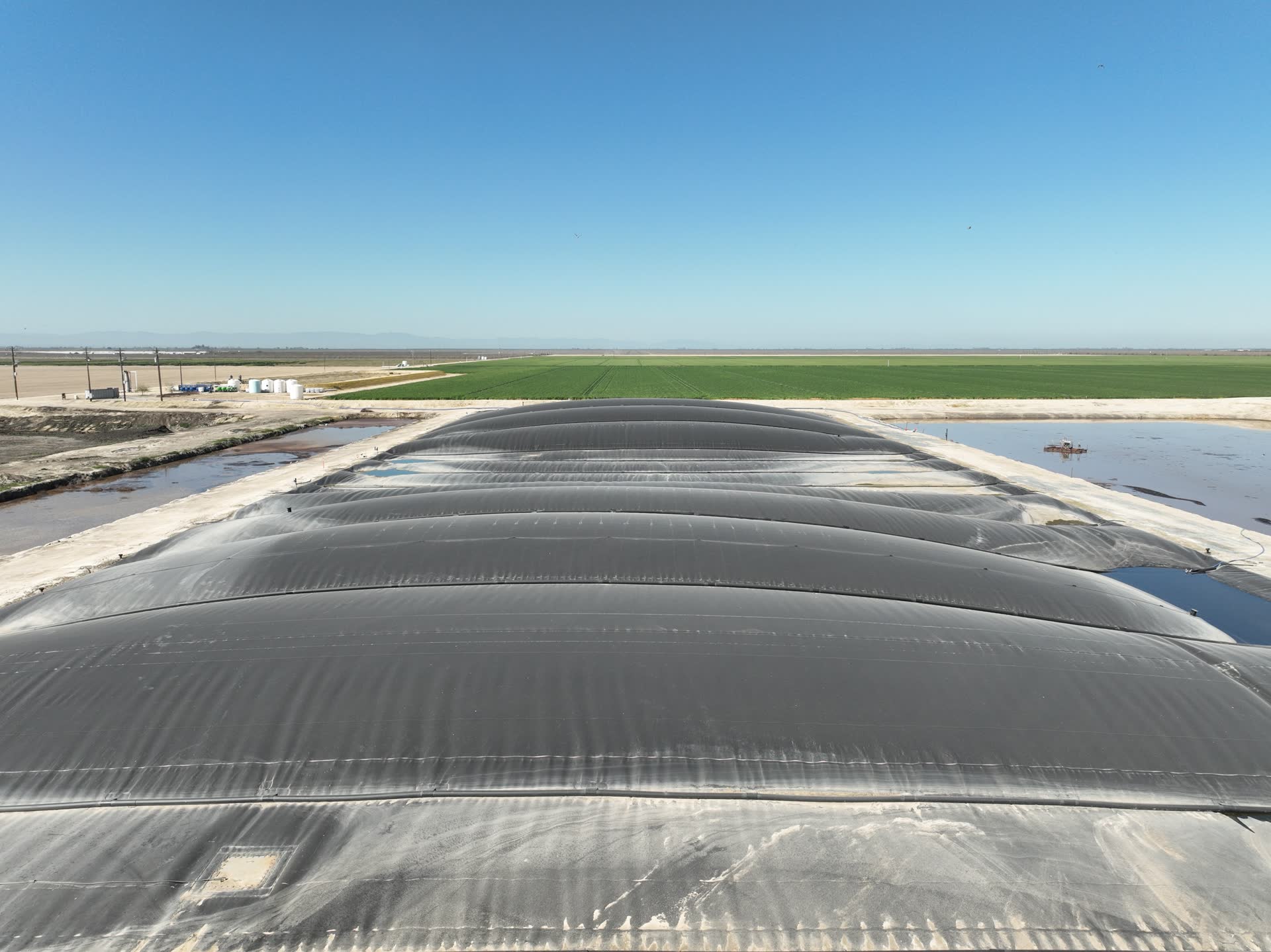
A covered-lagoon digester seals the lagoon, collects the gas, and cleans it to pipeline quality. Under LCFS accounting, the methane that would have escaped counts against the fuel's footprint. That avoided emission is large enough to swamp everything else in the lifecycle: the equipment, the hauling, the combustion at the end. The negative score comes from the capture, not from the flame.
California law pushes in the same direction. SB 1383 requires the dairy and livestock sector to cut methane 40 percent below 2013 levels by 2030, and digesters are one of the main tools dairies use to get there. That's context, though, not the mechanism. The mechanism is simple: destroy a potent greenhouse gas, get credited for it.
What a data center can do with it
RNG is pipeline-quality methane, so it runs in gas equipment you already own. No retrofits. That gives an infrastructure team a few practical options:
- Onsite generation. RNG-fueled generation is dispatchable. It runs when you need it, independent of weather or grid conditions.
- Backup power. Diesel backup generators carry a carbon and local-air cost. Natural-gas gensets running RNG deliver the same standby capacity with a lower lifecycle footprint.
- Heat and other gas loads. Anything on site that already burns natural gas can burn RNG instead.
- Attributes only. If the molecule can't physically reach your site, book-and-claim lets you buy the verified environmental attributes and apply them toward corporate targets.
That last option deserves a closer look, because it's how most large buyers actually transact.
Book-and-claim, in plain terms
Gas from a Central Valley digester moves by pipeline where an interconnect exists, and by tanker where it doesn't. Operators call the tanker route a virtual pipeline. Either way, the molecule usually gets burned somewhere in California. A buyer in another state, or a buyer whose campus has no gas service, can still claim the environmental benefit.
Book-and-claim is the standard mechanism for that. Production is metered, the attributes are tied to specific projects, and once a buyer retires them, they're gone. Nobody can claim the same attributes twice. It's the same logic behind renewable electricity certificates, applied to gas: physical delivery and environmental claim travel separately, and the registry keeps them honest.
On the money side, keep it simple. LCFS credits reward low-CI fuel used in California transportation, and voluntary buyers use verified attributes toward their own targets. The two markets work differently and the details shift, so confirm specifics with your own advisors before you structure anything.
How to verify every claim in this post
Don't take a producer's word for any of this, ours included. Three places to look.
CARB's LCFS pathway registry. Every certified fuel pathway is public: the facility, the carbon-intensity score, and the lifecycle analysis behind it. If someone quotes you a CI number, ask for the pathway and look it up.
EPA's livestock digester database. The federal database lists operating digester projects nationwide. Aligned-built digesters are in it, and federal records credit our operating projects with over 125,000 metric tons of CO2e avoided per year.
The attribute trail. Ask who meters the gas, which project the attributes come from, and where they get retired. A serious producer answers all three without hesitation.
If you want more background before those conversations, we keep a plain-language explainer at learn.php.
Who's behind the gas
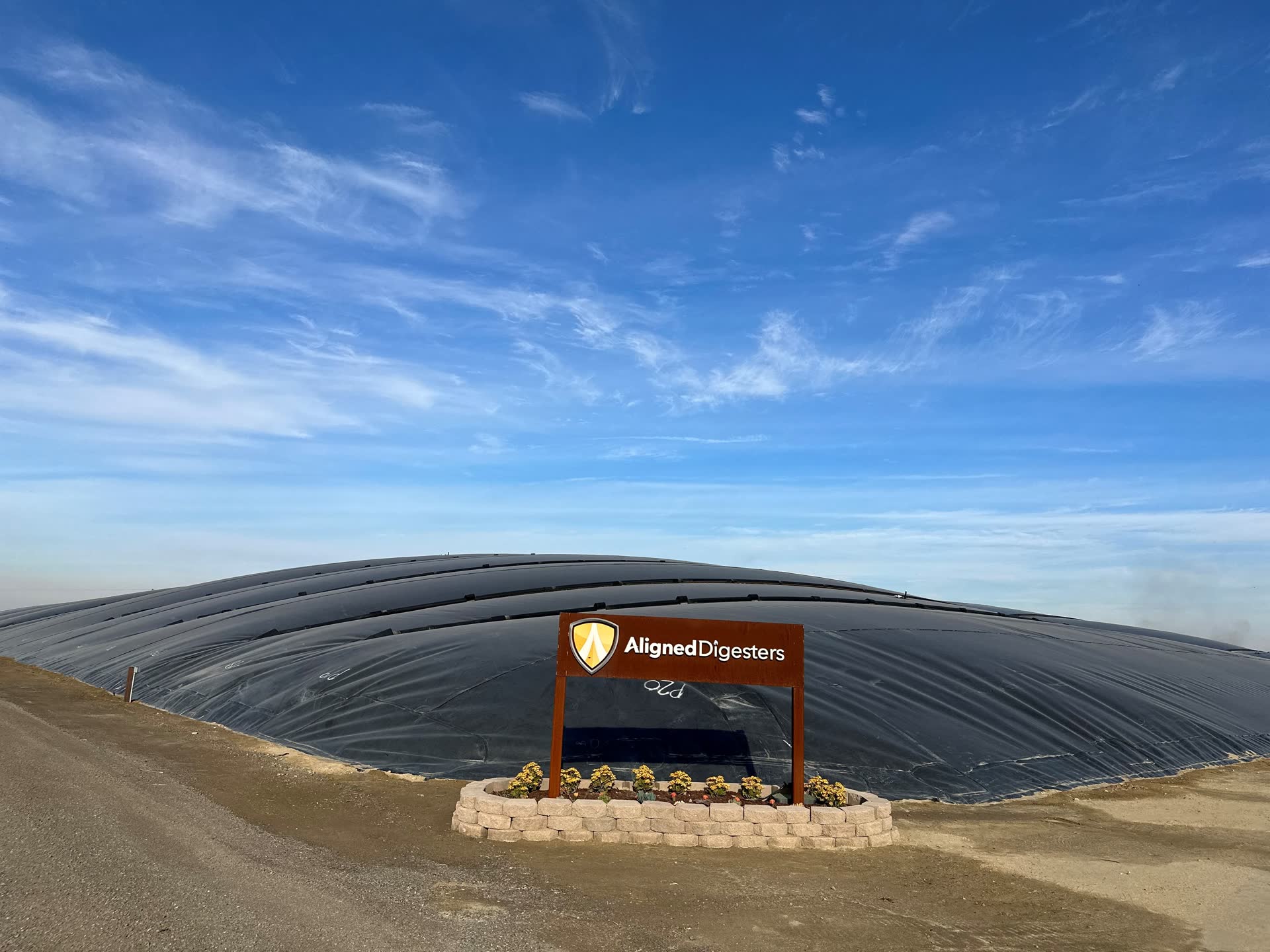
Aligned Digesters is a family company in Madera, California. We're dairy people. Since 2017 we've built covered-lagoon digesters on Central Valley dairies, including a 14-million-gallon lagoon that ranks among the largest in the state, and we operate them every day instead of handing them off. We haul our own gas, more than 12,000 tanker loads a year, and we hold a California contractor's license (CSLB #1065612). Details on how we build are at epc.php.
If your team is weighing carbon-negative fuel for generation, backup, or attribute procurement, the fastest way to evaluate it is a direct conversation with a producer who can show you the pathway and the meter. See how to buy it, or reach out and talk to the team.