Walk the perimeter of any large data center and you'll pass a row of diesel generators. They exist for the worst day of the year, but they run on plenty of ordinary days too. Testing hours, permit runs, and commissioning burns land in the same emissions ledger as real outages, and across a fleet of sites the total is bigger than most teams expect.
Where the diesel hours come from
Backup generators earn their keep by starting when the grid fails. To prove they will, operators run them on a schedule. Monthly exercise runs. Load bank tests that hold a unit at full output for hours. Transfer-switch checks. Commissioning at new sites, where a bank of gensets can run for days before the facility ever serves traffic.
None of those hours are optional. Insurers, uptime commitments, and manufacturers' maintenance schedules all require them. So a site that never sees a single grid outage still burns diesel every month, and a company running dozens of sites is operating what amounts to a small diesel power plant scattered across its portfolio.
That fuel shows up in Scope 1. It's combustion the company owns outright, on its own property, from its own tanks. There's no utility to share the accounting with and no grid-mix argument to make. Which is why backup generation keeps surfacing in sustainability reviews as the awkward line nobody has a plan for.
The drop-in cut: gas gensets running RNG
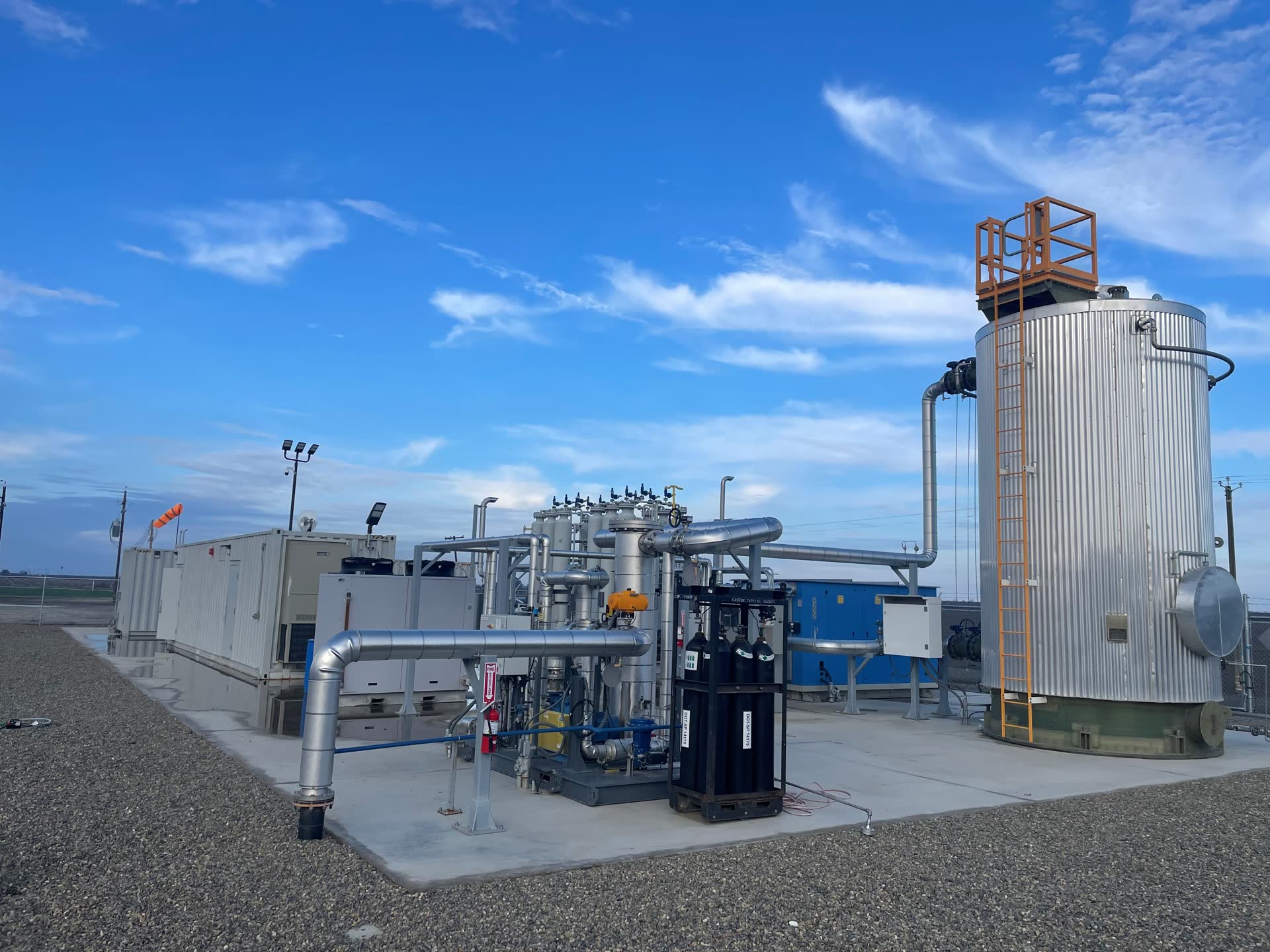
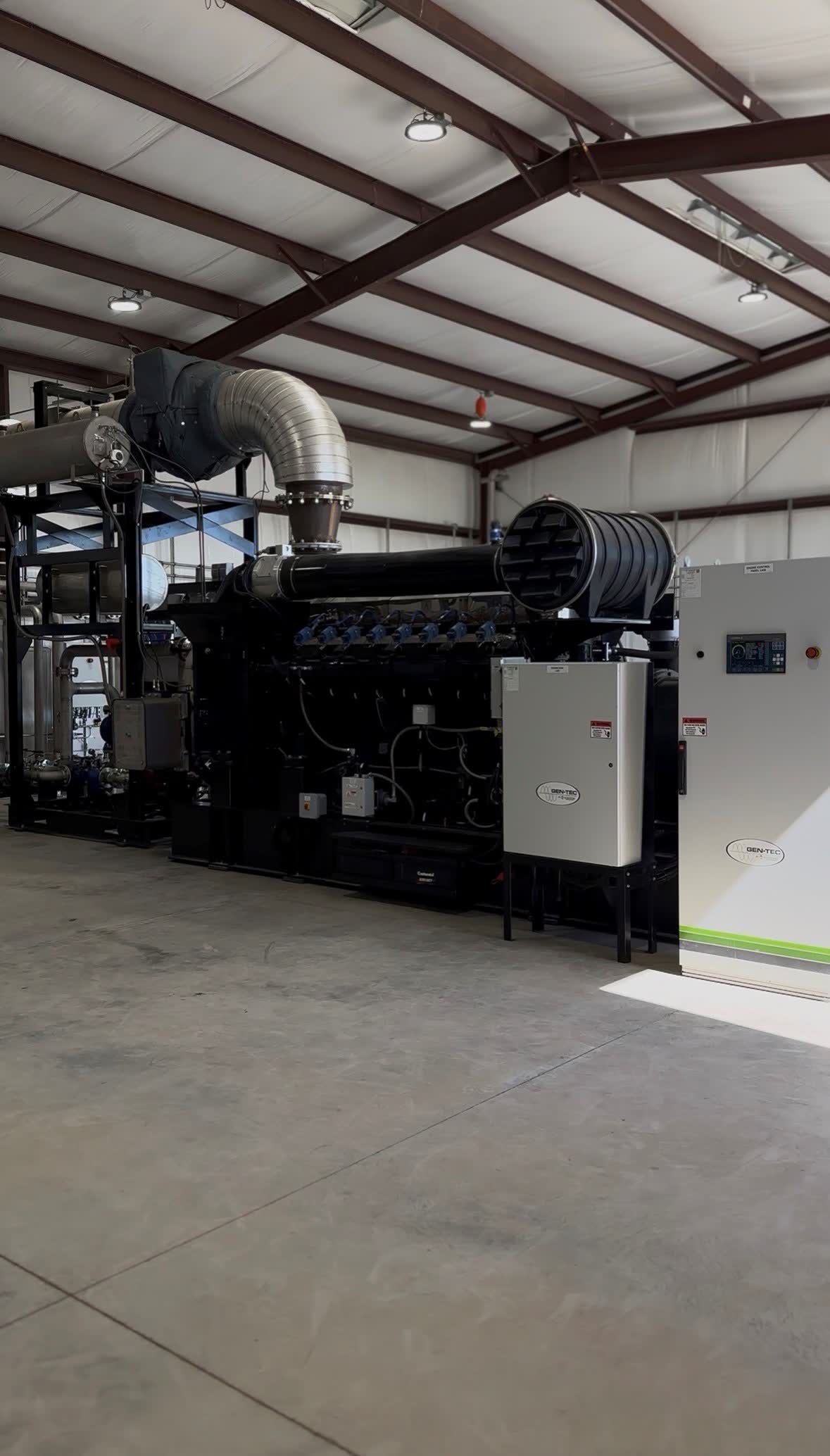
This problem has a clean mechanical answer. Natural-gas generator sets are mature, dispatchable machines, and renewable natural gas runs in them without modification. RNG is pipeline-quality methane captured from an existing waste stream instead of drilled out of the ground. Chemically it's the same fuel. Gas gensets, and the pipelines and meters that feed them, don't know the difference and don't need retrofits.
Swapping diesel units for gas gensets is a capital decision with real engineering tradeoffs, and nobody should pretend otherwise. But for new builds, and for sites already planning gas-fired backup or bridge power, fueling those machines with RNG changes the lifecycle footprint of every hour they run, test hours included. Diesel exhaust also carries a local-air cost that gas combustion largely avoids, which matters when your neighbors and your air permit both have opinions about your test schedule.
Why dairy RNG scores below zero
The unusual part of dairy RNG is its carbon math. CARB's Low Carbon Fuel Standard scores every fuel on lifecycle carbon intensity, in grams of CO2e per megajoule. Gasoline and diesel score positive, as you'd expect. Certified dairy RNG pathways score below zero. Around -400 gCO2e/MJ is the range on public record for dairy pathways, and projects we built are among them.
The negative number is not an accounting trick. Dairy manure stored in open lagoons releases methane, which traps roughly 28 times more heat than CO2 over 100 years. A covered-lagoon digester captures that methane before it reaches the atmosphere and turns it into fuel. Under CARB's lifecycle accounting, the avoided methane counts against the fuel's footprint, and it outweighs the CO2 released when the gas is eventually burned. Run a genset on that fuel and the test hours that used to be a straight emissions cost start pulling the ledger the other way.
California built this supply on purpose. SB 1383 requires the state's dairy and livestock sector to cut methane 40 percent below 2013 levels by 2030, and digesters are the main tool doing it. If you want the mechanics in more depth, our learn page walks through how a covered lagoon works.
Getting the gas to the site, or not
RNG moves two ways. Where a project connects to a pipeline, the gas is injected and flows like any other gas. Where there's no pipeline, it moves by tanker, what the industry calls a virtual pipeline. We run our own fleet and haul more than 12,000 loads a year, so trucked delivery is routine work for us, not an exception.
When neither route reaches your site, there's book-and-claim. It's the standard mechanism for buying the environmental attributes of a fuel when the molecule itself can't physically get to you. The gas is metered at the project, the attributes are tied to that specific project, and each one is retired once. Data centers already use the same logic for renewable electricity certificates. The gas version lets a company address its generator fleet's fuel without re-plumbing anything. Attribute purchases and physical fuel purchases do different jobs, though, and your own advisors should confirm how each counts toward your targets.
Backup power that can carry real load
There's a second reason gas generation keeps coming up in data center conversations: the grid connection itself. Interconnection queues are long, and plenty of sites can build faster than the utility can serve them. On-site gas generation is dispatchable. It can bridge a site until its full grid allocation arrives, carry load when it makes sense, or run as primary power where the utility can't yet serve the density.
The moment backup machines become bridge or primary machines, their run hours multiply, and so does the emissions consequence of the fuel choice. A diesel bridge plant is a hard thing to explain in a sustainability report. Gas gensets running RNG, or paired with retired RNG attributes, deliver the same dispatchable megawatts with a very different footprint.
What to check before you buy
Attribute markets reward skepticism. Before signing anything, ask the producer a few concrete questions:
- Is the project listed in the EPA's national livestock digester database, and does it hold a certified CARB pathway with a public carbon-intensity score?
- Who operates the digester day to day, and who hauls the gas? A producer that builds, operates, and hauls its own projects can answer for the whole chain.
- Are the attributes metered at the project, tied to it by record, and retired once, so nobody else can claim the same ton?
- Can they show federal or third-party verification of avoided emissions, not just projections?
We can answer those questions for our own projects. Aligned Digesters is a family company in Madera, California. We're dairy people, and we've been building digesters since 2017. We hold a California contractor's license (CSLB #1065612), we built a 14-million-gallon covered lagoon digester, one of the largest in the state, and federal records credit our operating projects with over 125,000 metric tons of CO2e avoided per year. We also design and build for others through our EPC work, so we know these systems from the concrete up.
If your generator fleet is the emissions line you keep deferring, it's worth an hour of conversation. See how the attributes are bought and retired, or use that page to reach the team directly.