Every fuel a fleet burns and every megawatt a data center draws carries a carbon score. For organizations with real decarbonization targets, the question is not whether to cut that score but which options actually move it. Dairy renewable natural gas — RNG made from captured dairy methane — consistently posts some of the lowest lifecycle carbon numbers of any fuel available today. Here is why, and how to get it.
How Fuels Are Scored
California's Low Carbon Fuel Standard (LCFS), run by the California Air Resources Board, assigns every fuel pathway a carbon-intensity (CI) score covering its full lifecycle: production, processing, transport, and combustion. Diesel sets the benchmark, and most alternatives score somewhat below it.
Dairy RNG sits in a different category. Pathways built on captured dairy methane routinely earn the lowest CI scores in the program — in many cases negative. A negative score means the fuel's lifecycle removes more greenhouse gas than burning it emits.
Why Dairy RNG Scores So Low
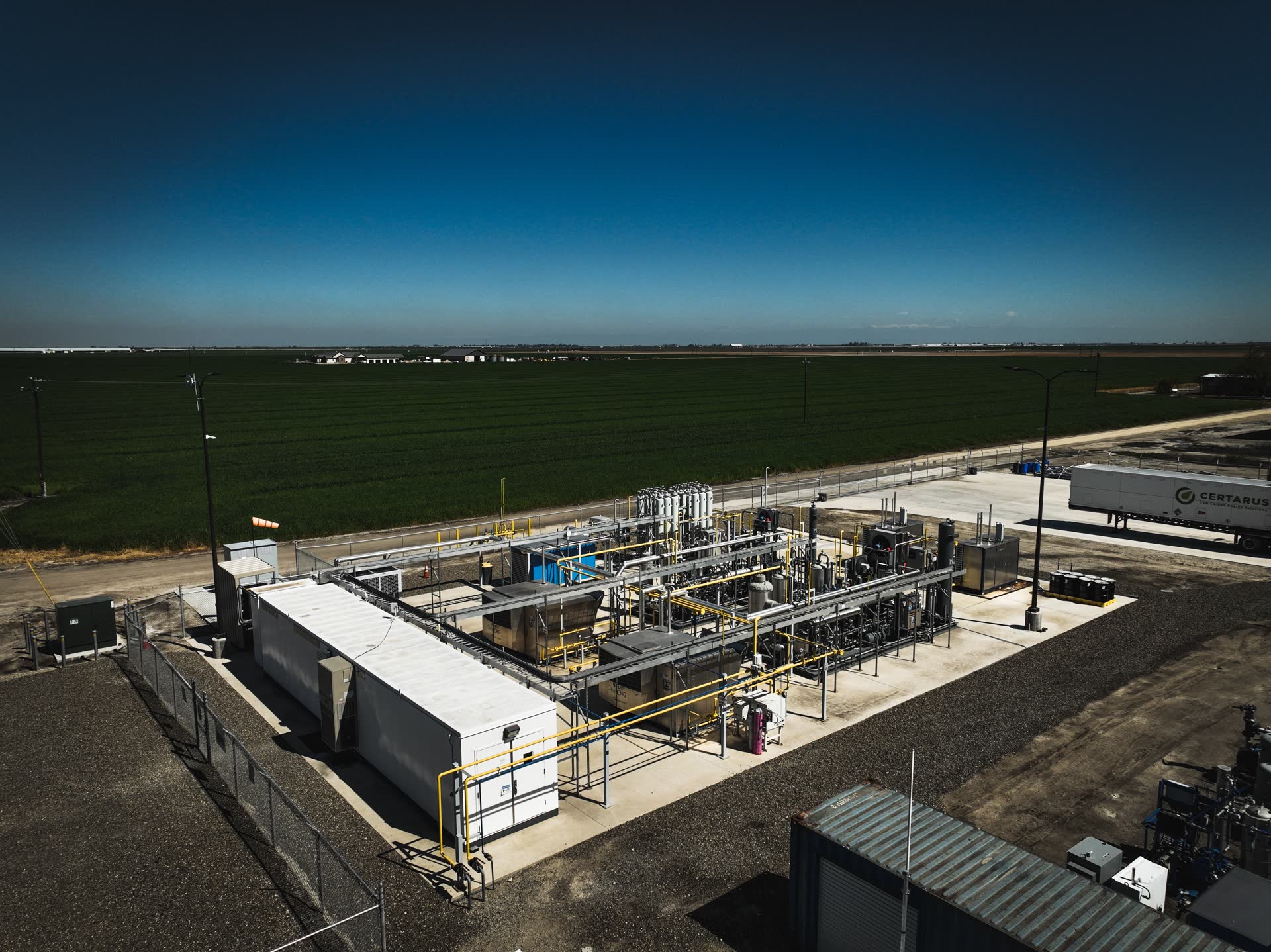
The answer is avoided methane. Manure stored in open lagoons decomposes and releases methane, a greenhouse gas many times more potent than carbon dioxide. A digester captures that methane before it reaches the atmosphere, cleans it to pipeline quality, and puts it to work as fuel.
So one unit of dairy RNG does two jobs at once: it displaces a fossil fuel, and it prevents a potent emission that was otherwise headed for the sky. Accounting for both is what pushes the score below zero. No other commercially available fleet fuel has that structure.
For Fleets: Anything on Wheels
RNG is chemically interchangeable with fossil natural gas, so any CNG or LNG vehicle can run on it today — trucks, refuse fleets, buses, yard equipment. No exotic drivetrains, no charging buildout, no payload penalty.
The supply logistics are solved, too. RNG moves by pipeline under long-term offtake agreements — Aligned Digesters' our long-term supply ventures project operates under a 20-year offtake with major energy companies — or by road as a virtual pipeline, with tankers delivering gas directly to fueling points. Our hauling division runs more than 12,000 tanker loads a year of milk and RNG/CNG, and we convert fleets to run on the fuel we produce.
For Data Centers: Power, Heat, and Attributes
Data centers need energy around the clock, and dairy RNG can serve that need several ways:
- Onsite generation and backup. RNG fuels gas generators for prime or backup power, with a dramatically lower lifecycle footprint than diesel gensets or standard grid gas.
- Cooling and heat. Facilities that use gas for absorption cooling or heat can substitute RNG directly — same equipment, same pipeline, different molecule of origin.
- Environmental attributes. Organizations can acquire the verified environmental attributes of dairy RNG to count against emissions targets, backed by measured methane capture rather than estimates.
For a sector under growing scrutiny over its energy footprint, fuel made from captured farm methane is a story that holds up: physical, measurable, and produced in the same state where much of the demand sits.
Supply You Can Verify
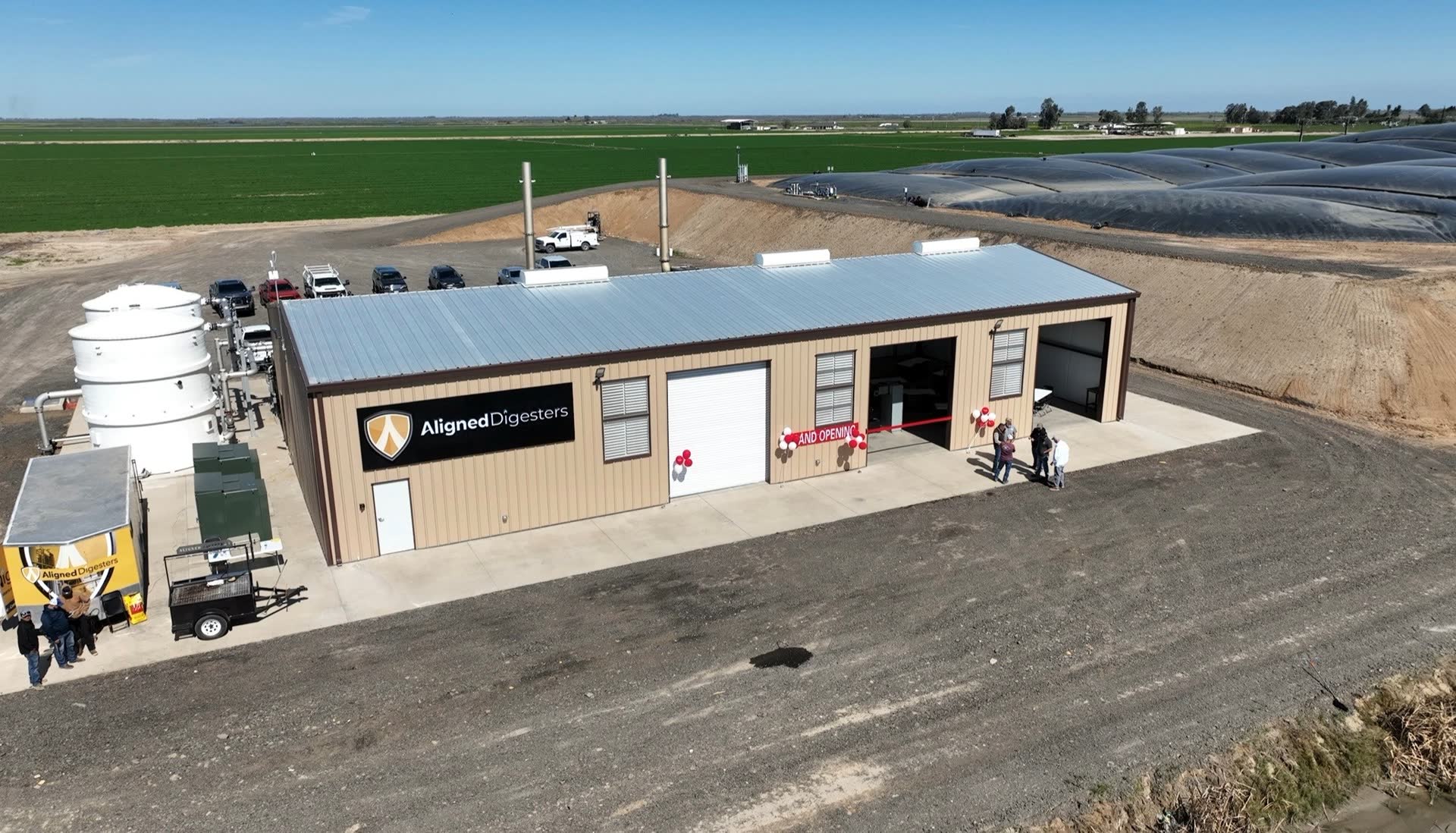
Dairy RNG's value depends on regulatory rigor — pathway certification, verification, and LCFS credit generation. That is where the producer matters. Aligned Digesters develops, builds, and operates its projects on Central Valley dairies, and has operated at digesters we operate since 2022. We work inside the CARB and LCFS frameworks daily, and the assets are real: lagoons, upgrading equipment, tankers, and gas flowing under contract.
If your fleet or facility has a carbon target that needs more than promises, reach out through our contact page or call (559) 420-7243.