Carbon neutral and carbon negative show up in the same sustainability reports, sometimes in the same sentence, and they describe two different kinds of math. One is an accounting result you assemble after the fact. The other is a measured property of the fuel itself, and if your company reports emissions, the difference decides how well your numbers survive an audit.
Carbon neutral is a ledger result
"Carbon neutral" means the books net to zero. A company emits some amount, buys offsets or credits equal to that amount, and the two cancel on paper. Nothing about the energy consumed changed. The diesel still burned, the grid power still came from wherever it came from. The neutrality lives in a separate transaction: a payment to a project somewhere else that claims to avoid or remove an equivalent quantity of CO2e.
There is nothing inherently wrong with that structure. Plenty of legitimate climate work gets financed through it. But the claim is only as good as the offset behind it, and offsets vary widely in how they're measured, whether the reduction would have happened anyway, and how long it lasts. Auditors know this. So do the analysts reading your report.
Carbon negative is a property of the fuel
A carbon-negative fuel scores below zero on its own lifecycle, before anyone buys anything extra. The standard yardstick in California is CARB's Low Carbon Fuel Standard, which scores every certified fuel pathway on lifecycle carbon intensity: grams of CO2-equivalent per megajoule of energy delivered, counting production, processing, transport, and combustion. Gasoline and fossil natural gas score well above zero. Certified dairy RNG pathways score below zero. Around -400 gCO2e/MJ is the range on public record for dairy RNG pathways, and projects Aligned built are among them.
Read that again, because it's an odd number the first time you see it. It says that producing and using a megajoule of this fuel leaves the atmosphere with several hundred grams less CO2e than doing nothing at all. That only makes sense once you know where the gas comes from.
Where the negative number comes from
Dairies produce manure every day, and manure in a wet lagoon produces methane whether anyone wants it to or not. Methane traps roughly 28 times more heat than CO2 over a hundred years, and more than that over twenty. An open lagoon vents it straight to the sky.
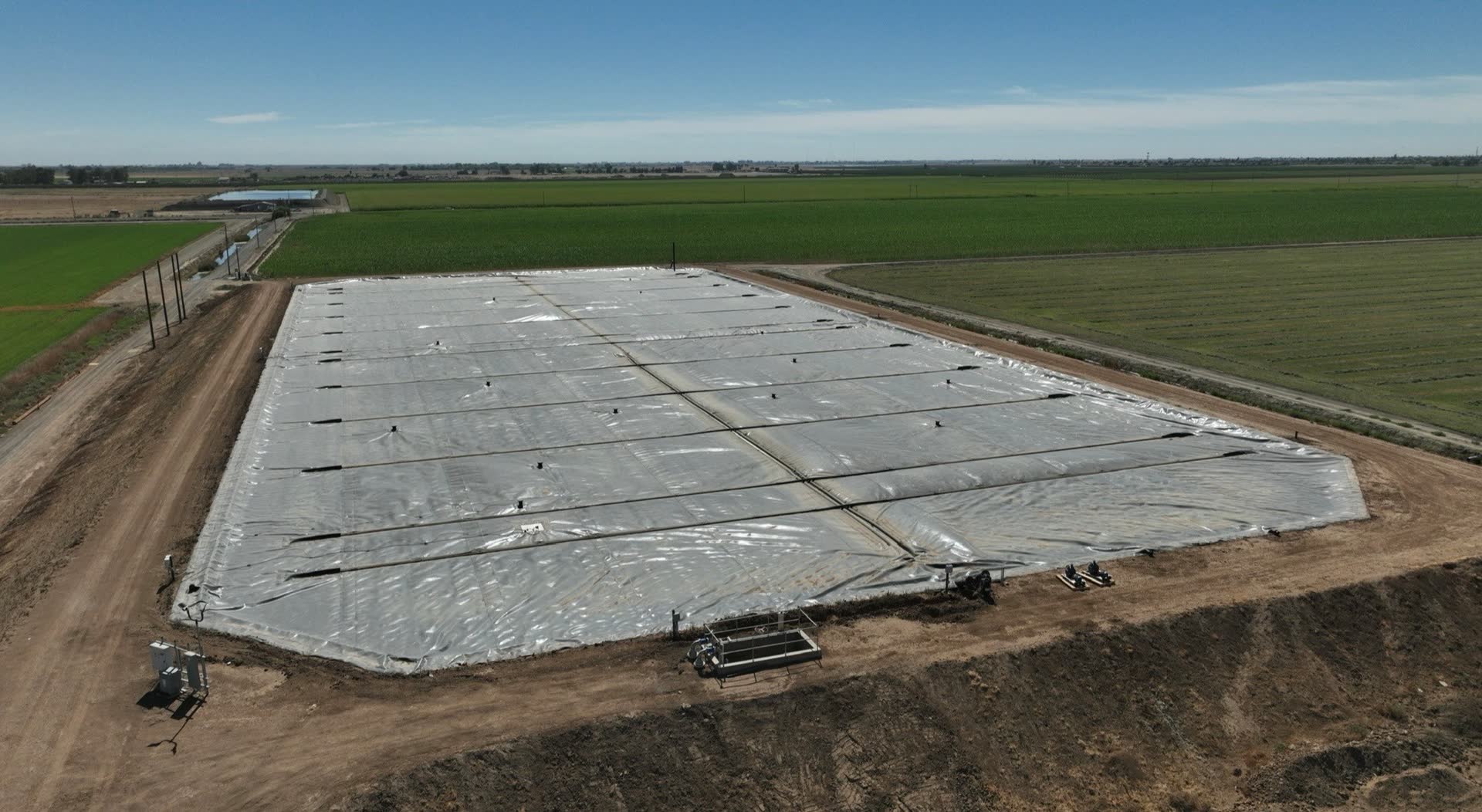
A covered lagoon digester captures it instead. The cover seals the lagoon, gas collects underneath, and it gets cleaned to pipeline quality and used as fuel. The methane that would have vented never reaches the atmosphere. Under LCFS accounting, that avoided methane counts against the fuel's footprint. Because methane is so much more potent than CO2, the avoided emissions outweigh the CO2 released when the gas is eventually burned, plus everything in between. The lifecycle total comes out negative.
None of this is a modeling trick. California law requires the dairy and livestock sector to cut methane 40 percent below 2013 levels by 2030 under SB 1383, so capture is tracked at the state level. At the federal level, digesters Aligned built are listed in the EPA's national livestock digester database, and federal records credit our operating projects with over 125,000 metric tons of CO2e avoided per year. The reductions sit in public records you can look up, not in a brochure. If you want the mechanics of how a digester works, the plain-language version is on our learn page.
Why an offset is not the same as a negative fuel
Both involve avoided emissions, so it's tempting to treat them as interchangeable. They aren't, and the difference is structural.
An offset pairs your emissions with a reduction from an unrelated project. Two separate activities, two separate measurements, joined by a purchase. Every assumption in the offset project's math becomes an assumption in your claim: would the reduction have happened anyway, how was it measured, will it last.
A negative-CI fuel puts the reduction inside the product. The capture, the fuel, and the score belong to one certified pathway, verified under the regulator's rules and tied to a meter. When you buy the attributes of that fuel, you aren't stapling a good deed to your emissions. You're buying energy whose certified lifecycle already lands below zero.
One honest caveat. A negative fuel doesn't erase the rest of your footprint. A generator running on RNG attributes still sits inside a company with travel, construction, and supply-chain emissions. Negative CI is a strong claim about the fuel. It is not a blanket claim about you, and treating it as one is how good numbers get misused.
What to check before you believe any claim
Whether someone offers you offsets, attributes, or a finished "neutral" badge, the same questions separate checkable claims from soft ones:
- Is the number a certified lifecycle score or an internal estimate? CARB pathway scores are public and independently verified.
- Is the attribute metered and tied to a specific project, or drawn from a pooled average?
- Has it been retired once, in a registry, so no one else can claim the same reduction? Double counting is the fastest way for a clean claim to go bad.
- Can you trace it to a physical site, and does the seller actually operate that site?
That last question matters more than it looks. A producer who builds, operates, and hauls its own gas controls the data end to end. A reseller three contracts removed from the lagoon usually can't answer the follow-up questions.
Where verified RNG attributes fit
Most buyers can't take physical delivery of dairy gas, and they don't need to. Book-and-claim is the standard mechanism: the molecule moves by pipeline or by tanker, and the environmental attributes are metered at the source, tied to a specific project, sold once, and retired. Voluntary buyers apply verified attributes toward corporate targets, and in California transport markets LCFS credits reward low-CI fuel. Program details shift, so confirm the specifics with your own advisors.
For data centers the fit is practical. RNG runs in existing gas equipment, including pipelines, generators, and gensets, with no retrofits, and RNG-fueled generation is dispatchable. Diesel backup carries a carbon and local-air cost that a natural-gas genset running RNG cuts on a lifecycle basis.
Aligned Digesters is a family company in Madera, California, founded in 2017 by dairy people. We build covered-lagoon digesters as a licensed California contractor, including a 14-million-gallon covered lagoon that is one of the largest in the state. We operate them daily and run our own tanker fleet, over 12,000 loads a year. The construction side is on our EPC page if you want to see what the build looks like. The attributes we sell trace back to lagoons we can drive you to.
If you're weighing a neutral badge against a negative fuel, start with the claim you can verify. See how to buy verified RNG attributes, or talk to the team.