A data center burns whatever gas shows up at its meter. The renewable gas it wants credit for might be produced on a dairy lagoon in California's Central Valley, nowhere near its service territory. Book-and-claim is the accounting mechanism that bridges that gap, and if your company plans to rely on it, you should know exactly how it works and where it stops.
The molecule and the attribute are separate products
A dairy digester captures methane off a covered lagoon, cleans it to pipeline quality, and sends it out as renewable natural gas. At that point there are two distinct things to sell.
The first is the molecule. RNG is methane, chemically the same as fossil natural gas. It runs in existing pipelines, generators, and gensets with no retrofits, and whoever receives it burns it like any other gas.
The second is the environmental attribute: the documented fact that this specific, metered quantity of gas came from captured dairy methane instead of a well. The attribute carries most of the climate value. Methane traps roughly 28 times more heat than CO2 over 100 years, so a digester that captures and destroys it changes the fuel's lifecycle math. CARB's Low Carbon Fuel Standard scores fuels on lifecycle carbon intensity, and certified dairy RNG pathways score below zero, around -400 gCO2e/MJ on public record. Projects Aligned built are among them. The score goes negative because the methane kept out of the air counts against the fuel's footprint. If digesters themselves are new territory, the basics are on our learn page.
Book-and-claim splits those two products so they can go to different buyers. One party burns the molecule wherever the gas physically flows. Another party, one the pipeline may never reach, buys the attribute and makes the environmental claim.
Why the mechanism exists
Gas grids are commingled pools. Once RNG enters a pipeline it mixes with everything else in the line, and no meter downstream can tell the molecules apart. Physical delivery to a named buyer stops meaning much a short distance past the injection point.
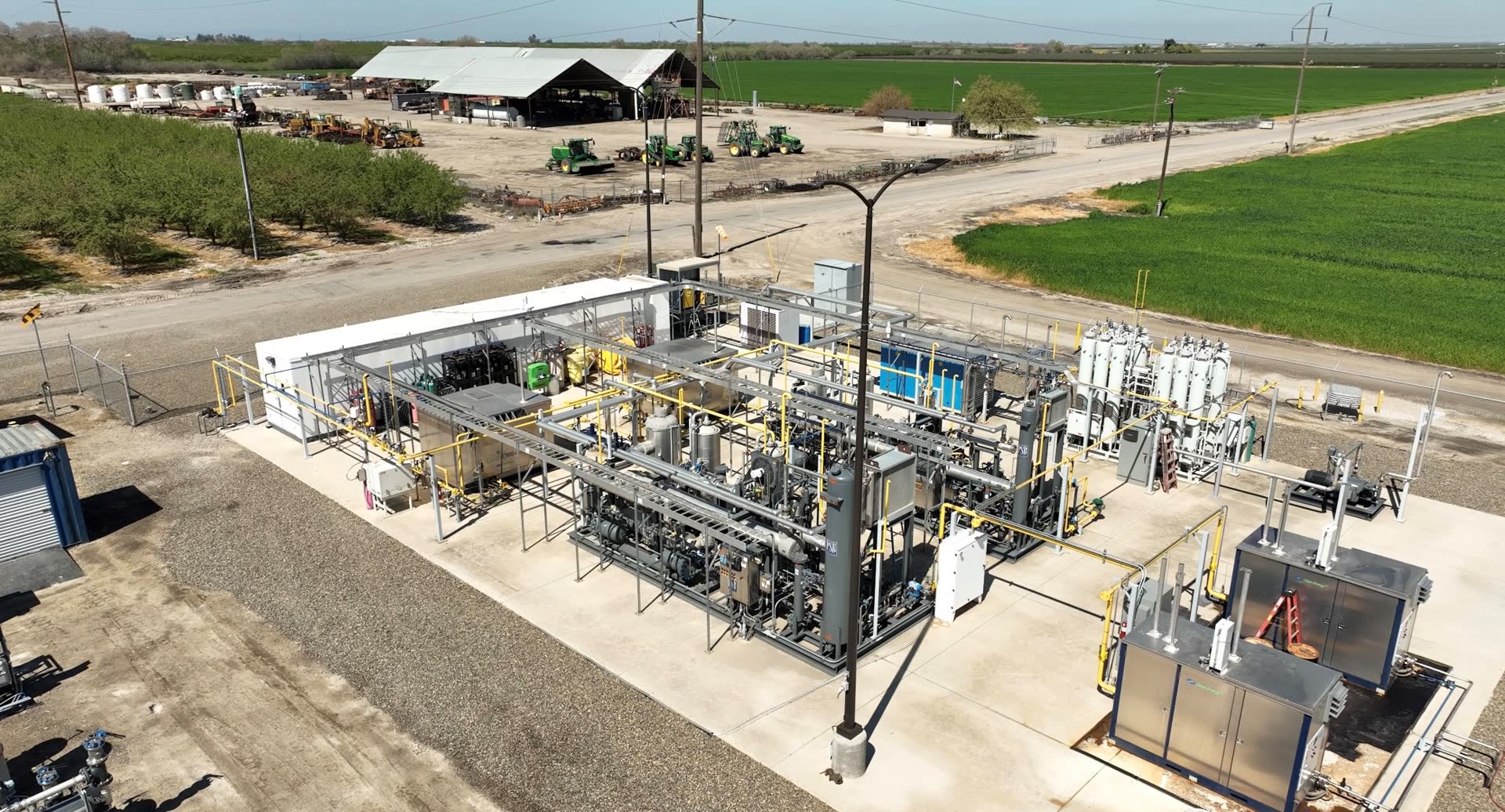
Some gas never touches a pipeline at all. It moves by tanker instead, what the industry calls a virtual pipeline. Aligned runs its own fleet and hauls more than 12,000 loads a year.
Then there's geography. SB 1383 requires California's dairy and livestock sector to cut methane 40 percent below 2013 levels by 2030, and covered-lagoon digesters are a big part of how that happens. The digesters sit on dairies in the Central Valley. The companies that want the attributes mostly don't. Book-and-claim exists because those two maps don't line up. It borrows a structure electricity markets proved out years ago with renewable energy certificates: book the production where it happens, claim the benefit where the buyer is.
Metering, registries, and one retirement
The chain works like this. A meter at the project records the gas as it leaves. Attributes are issued against those metered volumes, not against estimates, and each one is tied to the specific project and certified pathway that produced it. The attributes then live in a registry, which tracks who holds them. When a buyer applies one toward a target, the registry retires it. A retired attribute is finished. It backs one claim and then it's done.
Retirement is what keeps the system honest. Without it, the same avoided methane could back an LCFS credit for transport fuel in California and a voluntary corporate claim at the same time. Registries exist to prevent exactly that. A serious seller can show you the metered volumes, the pathway certification, and the retirement record for every attribute you buy.
What makes a claim solid
Before you buy, ask the questions an auditor will ask you later.
- Is production metered at the project, and do issued attributes match the metered volumes?
- Does each attribute trace to a named project with a certified pathway on public record?
- Is it held in a single registry, so it can't be issued twice under two systems?
- Was it retired specifically for your claim, with documentation, and for nobody else?
- Do the vintage and the program fit the target you're reporting against?
If a seller can't answer these cleanly, the price doesn't matter.
What book-and-claim can't do
It can't move gas. Your facility keeps burning whatever is in the local pipe or the onsite tank. If you want RNG physically on site, to run natural-gas gensets instead of diesel backup for example, that's a delivery question, and delivery happens by pipeline or by tanker. Book-and-claim is the answer when delivery isn't practical. It is not a substitute for delivery when the molecule itself is the point.
It doesn't change the air at your site. The attribute covers lifecycle carbon, not what comes out of a local stack.
It won't rescue a weak project. If the underlying production isn't metered and the pathway isn't certified, clean paperwork adds nothing. The claim is only as good as the digester behind it.
And it doesn't decide how your reporting framework treats it. LCFS credits reward low-CI fuel used in California transport. Voluntary buyers apply verified attributes toward corporate targets under accounting protocols that vary from program to program. Confirm the specifics with your own advisors before you commit.
Know who's on the other end
Every attribute traces back to a physical project that somebody built and somebody runs every day. That's where diligence should start, because the paper is only a record of what the project actually did.
Aligned Digesters is a family company in Madera, California, founded in 2017 by dairy people. We build covered-lagoon digesters as a licensed California contractor (CSLB #1065612), including a 14-million-gallon covered lagoon that is one of the largest in the state. We operate what we build, and we haul the gas ourselves. Our digesters are listed in the EPA's national livestock digester database, and federal records credit our operating projects with over 125,000 metric tons of CO2e avoided per year. The build side of that work is described on our EPC page.
If your team is weighing book-and-claim RNG and wants to talk with the people who produce the gas and keep the records, see how to buy it.